Wingstop Gluten Free Menu
You want a clear answer before you order. This guide sets expectations so you can decide if this fast-casual chicken spot fits your needs today.
Officially, the chain does not claim items are gluten free. Shared fryers and prep tools can turn wheat-free ingredients into a higher-risk choice for cross-contamination.
This short guide explains what “gluten-free” can mean at a chicken restaurant and why it often becomes “gluten-friendly” in real kitchens. You will get quick takeaways: which wings may pass ingredient checks, what to avoid, and how to order with fewer surprises.
Remember: locations run differently. The safest choice depends on your local store, their oil practices, and how staff handle prep. If you have celiac disease, consider choosing a different restaurant to avoid cross-contact.
Key takeaways: ingredient-safe wing options, items to skip, ask about fryers, and use this U.S.-focused guide based on official allergen info plus consistent customer reports.
What to Know Before Ordering Gluten-Free at Wingstop
Understand the kitchen practices that change how “no gluten ingredients” plays out. The company does not claim certified gluten-free status, and fried foods are cooked in the same oil. That raises practical risk for people with celiac disease.
Why a “no gluten ingredients” label isn’t the same as certified
Ingredients lists can show no wheat, yet cross-contact still happens. Shared fryers, busy prep lines, and shared utensils raise the chance that traces will transfer.
Common wheat-containing items and flavors to watch
Sources list several items that contain wheat or may contain gluten. Examples include brownies, blue cheese dip, Hawaiian flavor, Spicy Korean Q, and limited-time items like Sweet Chili Glaze. Ask staff about any flavor you plan to order.
- Confirm ingredients and allergen practices at your location.
- Ask whether fryers are shared or filtered only.
- Choose the simplest order to lower cross-contact risk.
For a step-by-step checklist and deeper allergen information, see the detailed guide here: Wingstop gluten-free guide.
Official Wingstop Allergen Menu and Where to Find It Online
Start by downloading the official allergen PDF so you can check ingredients before you order. Save it to your phone for quick access when you reach the counter.
How to use the PDF like a pro
Open the PDF from the restaurant website or directly via this link: https://s3.amazonaws.com/wingstop.com/assets/static/WS_Allergens_8.21.25.pdf.
Search each item name. Then check sauces, dips, and sides separately. Look for wheat flags and cross-contact notes.
Why online information can differ by location
The PDF lists ingredients and allergen calls, but franchise locations may vary in sourcing and prep. “Contains” differs from “may contain” and still needs a chat with staff.
- Save the file on your phone before ordering.
- Ask staff about fryer use and handling at your specific locations.
- Watch for hidden sources: dips, limited-time flavors, and toppings.
| Resource | What to check | Quick tip | Link |
|---|---|---|---|
| Allergen list PDF | Item allergens, wheat calls, ingredient notes | Search names; cross-check sauces | https://s3.amazonaws.com/wingstop.com/assets/static/WS_Allergens_8.21.25.pdf |
| Website info | Updated ingredients and policy text | Check timestamps and print date | Official website pages |
| In-store verification | Fryer practice and prep handling | Ask a manager before ordering | Confirm at your locations |
Shared Fryer and Cross-Contamination Risk at Wingstop
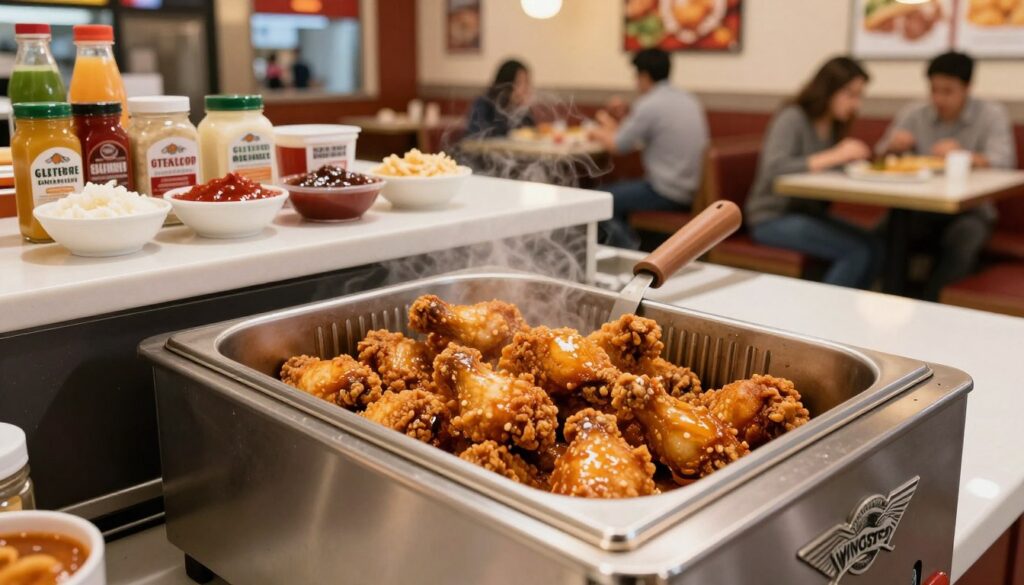
Before you bite in, know how oil and equipment can turn a safe-sounding order into a risk. The biggest factor is how fried items are handled on the line. That setup changes everything for people avoiding wheat-based breading.
How crumbs, baskets, and tools spread gluten
Breaded chicken sheds crumbs into the oil. Those particles float and cling to baskets and tongs. A shared fryer quickly turns separate orders into cross-contamination events.
What filtering oil actually means
The company says they filter oil to minimize cross-contamination. Filtration removes debris but does not reliably remove microscopic gluten proteins.
Prep-line hazards beyond the fryer
Gloves, counters, sauce bowls, and shared utensils all let cross happen. A sauce splash or a tossed wing in a common bowl can contaminate otherwise plain items.
Real-world reports and what to ask
Community reports vary by locations: some say they use a dedicated fryer for certain items; others report shared oil and reactions. Ask the manager if a truly dedicated fryer exists, when it was last cleaned, and whether staff will use new gloves and a fresh bowl for your order.
- Confirm fryer setup at your local store.
- Request fresh gloves and utensils for your order.
- Prefer simple, unbreaded items to lower risk.
Wingstop Gluten Free Menu: Items That May Be Gluten-Free by Ingredients
Pick plain items as your starting point to lower the chance of cross-contact.
Classic bone-in wings and when they help
Classic bone-in wings often have no breading. That makes them one of the better options if you check handling at your local store.
Ask staff if the fry oil is shared and request fresh gloves and a clean bowl when your order is prepared.
Dry rubs vs sauces
Dry rubs can be simpler than sauces. Sauces sometimes hide wheat in thickeners or flavor bases. Still, some rubs include wheat, so verify the seasoning before you order.
Low-risk sides and popular fried items
Veggie sticks (celery and carrots) are the lowest-risk side. They are not fried and have fewer touchpoints.
Fries and fried corn are commonly cited as gluten-friendly by patrons. Confirm whether a dedicated fryer exists before assuming safety.
Simple order formula
Plain classic wings + verified rub + veggie sticks. Skip dips or ask for a sealed packet if you need a sauce.
| Item | Size | Real-time price at your location (enter from app/website) | Notes |
|---|---|---|---|
| Classic Wings (plain) | 6 / 10 / 20 | Enter local price | Confirm fryer and toss handling |
| Fries | Small / Regular / Large | Enter local price | Ask if fryer is shared with breaded items |
| Veggie Sticks | Single | Enter local price | Lowest cross-contact risk; not fried |
Menu Items That Contain Gluten at Wingstop
Certain breaded and sandwich choices are clear sources of wheat on this chain’s offerings.
Boneless wings and tenders are breaded with wheat. That makes these items direct sources that contain gluten even before fryer cross-contact is considered.
Chicken sandwiches add a second layer of exposure. You get breaded chicken plus a wheat bun. Together, they are one of the most straightforward ways to contain gluten on the menu.
- Boneless wings — breaded with wheat; avoid if you must skip gluten.
- Tenders — typically coated in wheat-based batter and should be treated as containing gluten.
- Chicken sandwiches — breaded chicken and buns both add wheat.
Flavors, dips, and limited-time items to watch
Some sauces and flavors specifically list wheat in ingredients. Examples reported include Hawaiian and Spicy Korean Q. Limited-time choices like Sweet Chili Glaze are higher risk because recipes change fast.
Desserts and dips also show up on allergen lists. Brownies and blue cheese dip are called out as containing wheat or presenting cross-contact concerns. Treat limited-time items as higher-risk and ask staff for current ingredient details.
| Item | Why it contains gluten | Quick advice |
|---|---|---|
| Boneless wings | Breaded with wheat-based coating | Avoid or confirm dedicated fryer |
| Tenders | Wheat batter on chicken pieces | Consider plain bone-in wings instead |
| Chicken sandwiches | Breaded chicken plus wheat bun | Skip bun or choose another restaurant |
Gluten-Free Sauces, Dry Rubs, and Seasonings: What to Choose and Avoid
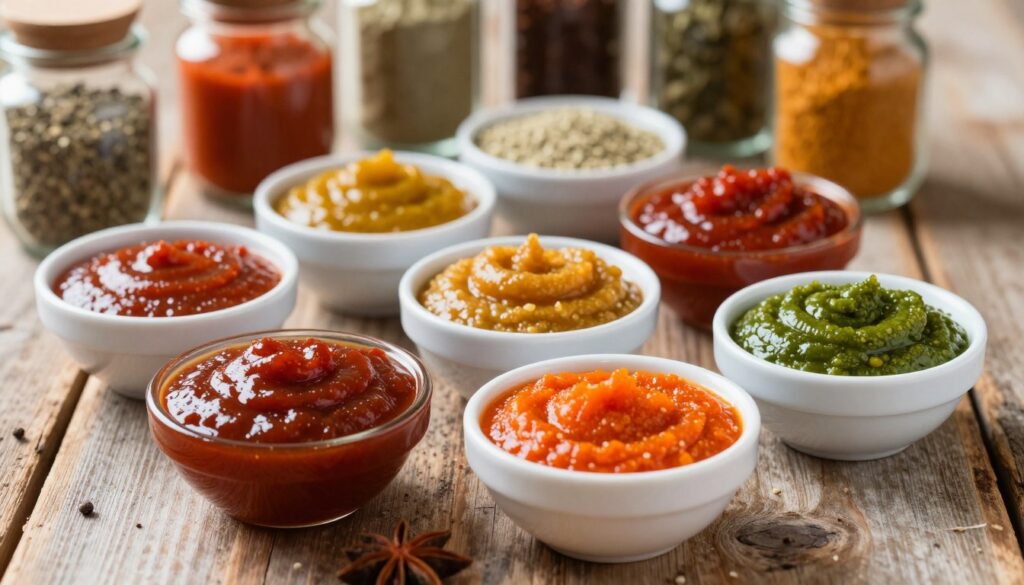
What you toss on those wings can make a big difference for sensitivity.
Start by treating Hawaiian and Spicy Korean Q as automatic avoids. Both flavors are flagged for wheat in public allergen lists and customer reports. Do not assume a sauce is safe without checking ingredients.
Why dry rubs look simpler but still need checks
Dry rubs and simple seasoning blends can be lower risk than thick sauces. Still, blends sometimes include wheat or starch as a binder.
Use the allergen PDF or ask staff to confirm the exact ingredients before you order.
How to request plain wings and add seasoning safely
- Order classic wings plain so they are not tossed in shared bowls.
- Ask for a fresh bowl, new gloves, and clean utensils for any finishing seasoning.
- Consider taking plain wings home and adding your own safe sauce or rub.
| Flavor | Flagged for wheat | Quick advice |
|---|---|---|
| Hawaiian | Yes | Avoid; confirm ingredients |
| Spicy Korean Q | Yes | Avoid; use plain wings |
| Dry rub options | Sometimes | Verify allergen info; request fresh prep |
Dips and Sides: Blue Cheese, Ranch, Fries, and Other Add-Ons
Dips and sides can quietly change a safe order into a risky one. A creamy container or a shared bowl may carry traces from wheat-based items even when ingredients look simple.
Blue cheese dip concerns
Blue cheese dip is flagged on many allergen lists for containing wheat. Skip it if you want to avoid guesses. Treat blue cheese as a clear caution item unless staff confirm otherwise.
Ranch and other dips
Ranch and similar dips can appear gluten free by ingredients. Still, lids, ladles, and shared prep bowls raise cross-contamination risk. Ask for sealed single-serve packs when possible.
Fries, cheese fries, and loaded versions
Fries are often gluten-free by ingredients, but a shared fryer or oil with breaded items can change that for people with celiac disease.
Cheese fries and loaded fries add sauces and extra handling. Each step increases the chance of cross-contamination compared with plain fries.
- Lowest-drama add-on: veggie sticks first.
- Only accept dips if a manager confirms clean handling.
- Choose plain fries after verifying fryer practice.
| Item | Why to check | Quick tip |
|---|---|---|
| Blue cheese dip | Reported to contain wheat in allergen lists | Avoid or request ingredient packet |
| Fries | Often gluten-free by ingredients; fryer cross-contact risk | Ask if fryer is shared with breaded items |
| Cheese fries | Extra sauces and assembly raise handling steps | Order plain fries and add sealed cheese if available |
How to Order Gluten-Free at Wingstop in the United States
A quick phone call can change a risky order into a safe one. Call before you go and ask whether your local store uses a dedicated fryer. Community reports show some locations do, while others do not.
Call ahead and ask about a dedicated fryer at your location
Call and speak to a manager who can confirm fryer and oil practices. If they say a separate fryer exists, your options improve. If not, consider plain veggie sticks or takeout from another restaurant.
Speak to a manager and request clean gloves, utensils, and fresh bowls
Ask the manager to use new gloves, a fresh bowl, and clean utensils when preparing your order. Politely request they confirm ingredients and any wheat flags in your chosen flavor. Clear, procedure-based answers matter more than vague reassurance.
Best times to order to help minimize cross-contamination
Choose slower windows — mid-afternoon weekdays — so staff can follow special prep steps. Peak dinner or weekend rushes increase the chance of cross-contamination and mistakes.
What to say when asking about ingredients, wheat, and allergen procedures
Use a short script: “Hi, can I speak to a manager? Does this location use a dedicated fryer or separate oil for plain wings? Do your ingredients list wheat for this flavor, and can staff use fresh gloves and a clean bowl?”
| Ordering Method | What to Ask | What to Expect |
|---|---|---|
| Dine-in | Manager confirms fryer, gloves, bowl | Possible fresh prep if quiet |
| Pickup / App | Call ahead; add note to order for fresh prep | Staff can prepare separately if they have time |
| Takeout / Delivery | Confirm fryer use and sealed dips | Good option if manager confirms procedures |
Making the Right Call for Your Gluten Sensitivity
When sensitivity matters, your choice should match both your body and the store’s practices.
Lean toward the simplest wings and clear-seasoning choices. Ask about the fryer and the oil used. Keep orders short and avoid extra sauces unless staff confirm ingredients and clean prep.
If the location can’t verify fryer separation, allergen details, or wheat in flavors, walk away. Your comfort is more important than a risky order of chicken or fries.
Keep the official allergen PDF handy. Verify ingredients each visit and pick low-risk items so your food feels like comfort, not worry.