Wingstop Wing Flavors Menu
You’re about to get a clear, decision-ready guide to the current Wingstop Wing Flavors Menu in the United States. This intro lays out what to expect and how to use the page.
You’re not just picking a flavor. You’re choosing a style — sauce or dry rub — plus a heat level and a protein. Those choices change the whole meal.
We’ll point out the most-ordered classics you’ll see again and again. We’ll also flag new drops and limited-time options so you know what’s seasonal or permanent.
Use this guide by skimming heat levels, jumping to spotlights, or trying the “next order” builder at the end. Rankings change by outlet and by delivery time, so you’ll get practical tips, not just opinions.
Pricing varies by location. The pricing section shows how to check your real total fast before you place an order.
Wingstop’s flavor story and why it keeps people coming back
A simple idea from a Texas diner grew into a chain defined by memorable tastes. Antonio Swad opened the first restaurant in Garland, Texas, in 1994 after noticing how guests packed a fine‑dining happy hour for wings. Two years later he began franchising and the brand spread fast.
From Garland, Texas in 1994 to thousands of locations today
Today there are well over 2,000 locations across 11 global markets. Franchising let the concept scale while keeping core recipes intact. That’s why many restaurants share the same signature choices yet still feel local.
Why “once they had that flavor in their mouth” became the brand’s edge
Swad’s 2023 line—“Once they had that flavor in their mouth it haunted them… until they came the next time and the next time”—captures the reason repeat customers return.
- Origin story ties the items into decades of trial and taste.
- Flavor memory drives repeat orders; it’s the practical why behind bold sauces and rubs.
- Execution varies by restaurant due to freshness, hold times, and sauce application.
- Next up: clear picks like “best for heat” and “best for comfort” so you can order with confidence.
| Origin | First Franchise | Current Reach |
|---|---|---|
| Garland, TX (1994) | 1996 | 2,000+ locations |
Wingstop Wing Flavors Menu: what you’re really choosing when you order
Ordering picks more than a taste. It sets texture, mess, and how food holds up on the trip home.
You can go two ways. Wet sauce clings and can drip. Dry rubs sit on the surface and keep crisp longer.
Sauces vs dry rubs and how they change taste, mess, and crispiness
Sauces add shine and coating that soaks into breading. That yields big flavor fast but softens crunch over time.
Rubs lock in seasoning and texture. They make fried chicken stay grippy for longer, ideal for travel.
How proteins take flavor
Bone-in wings show skin and char. Boneless and tenders highlight breading. Sandwiches mellow the profile under the bun and toppings.
- Pick a rub for delivery; it keeps crunch.
- Mix one saucier option for bright taste and one rub for texture balance.
- Check the app for limited-time drops; some, like Sweet Chili Glaze, may stick around.
| Protein | Texture | Best pick |
|---|---|---|
| Bone-in | Skin-forward | Rubs or light sauces |
| Boneless/Tender | Breading-forward | Bold sauces or dry rubs |
| Sandwich | Muted by bun | Savory sauces |
How to read Wingstop heat levels from mild to Atomic
Heat on the list runs from gentle tang to full‑blast scorch. Learn the ladder so you can order for a mix of tastes without surprises.
Mild and Original Hot: familiar buffalo-style tang
Mild sits at the bottom. It gives comfort-food tang without much sting. Original Hot and original hot sauce live a step up. They bring classic buffalo vinegar notes that most people recognize.
Cajun and Louisiana Rub: seasoning-first bite
These are more about spice from seasonings than pepper heat. You feel layered salt, herbs, and peppery warmth rather than a straight pepper burn. That makes them a good pick when you want flavor over sheer heat.
Atomic: the max-heat warning
Atomic is the top rung — historically labeled “Extremely Hot!” Order it as part of a split-flavor set unless you know you can handle it. Ranch and dips add richness, but some tasters say ranch can even make Atomic feel hotter.
- Plain-English ladder: Mild → Original Hot → Cajun/Louisiana Rub (seasoning) → Atomic.
- Balance tip: pair one hot choice with a non-heat rub like Lemon Pepper or Garlic Parmesan.
- Use dips for richness; remember Atomic may still dominate mouthfeel.
| Level | Feel | Best use |
|---|---|---|
| Mild | Low heat, tangy | Kids, nostalgia |
| Original Hot | Classic buffalo bite | Everyday heat |
| Atomic | Extreme pepper heat | Split orders, dares |
What the taste tests looked at (and why rankings vary by outlet)
A panel of eight tasters (ages 5–49) sampled 14 nationwide options in a controlled tasting run by The Takeout (Feb 2025). They scored each entry across clear criteria so you can see why results shift by location and service.
H3: Criteria used
Tasters judged taste, smell, appearance, messiness, uniqueness, and overall appeal. Smell and the first bite often sway a score. Strong garlic, soy, smoke, or pepper notes can change impressions before the second bite.
Immediate bites favor wet, saucier options. Tasting Table (updated Jan 2026) found wet sauces sog breading faster over time. Dry rubs keep crunch longer, which affects how one order will feel at home versus at the counter.
- Expect: a great taste may still lose points for messiness or heaviness.
- Appearance sets expectations; darker or glossy sauces read heavier before you taste them.
- Delivery tip: ask for sauce on the side when possible to preserve texture.
| Factor | Why it matters | Quick fix |
|---|---|---|
| Taste | First impression and lasting flavor | Pair with a mild dip |
| Texture over time | Sauce soak vs rub crunch | Order sauce on side |
| Appearance | Sets expectation before bite | Split flavors for contrast |
Use rankings as a starting way to pick. Adjust by your priorities — low mess, big heat, bright citrus, or comfort — and remember outlet variation can change the result.
Best overall flavor picks people keep ordering

If you want reliable taste that keeps people ordering, start with these top picks. They cover sweet, bright, seasoned, and comfort profiles so you can order fast and feel confident.
Hot Honey Rub
Hot honey rub blends sugar and mild chile for a sweet-heat dry finish. It keeps crispness and pairs well with ranch. Across rankings, hot honey rub lands near the top because it balances heat and sweetness without sogginess.
Lemon Pepper
Lemon pepper offers bright citrus and cracked pepper that refreshes the palate. It travels well on tenders and wings and works as a clean break between spicier bites.
Louisiana Rub
Louisiana rub reads like Old Bay-style seasoning. It’s seasoning-forward and punchy. Choose it when you want a full spice blend rather than a simple sauce.
Garlic Parmesan
Garlic parmesan is buttery and garlicky with zero heat. It feels like a comfort pick for families and kids. The rub keeps texture while giving a rich carry that avoids dryness.
- Quick order tip: pick two — one bright, one savory — and add one spicy option if you need heat.
| Flavor | Profile | Best for |
|---|---|---|
| Hot Honey Rub | Sweet + mild heat, dry rub | Groups, ranch pairing |
| Lemon Pepper | Citrus + cracked pepper | Travel, tenders, wings |
| Louisiana Rub | Seasoning-forward, savory | Fans of Old Bay-style spice |
| Garlic Parmesan | Buttery, garlicky, no heat | Kids, family comfort orders |
Hot Honey Rub spotlight: the honey-and-cayenne rub that went permanent
A honey-and-ancho dry rub changed the playbook: sweet notes without the usual sticky glaze. It first appeared as a limited run in 2022 and became permanent by July 9, 2024. R&D calls it a dry mix that pairs honey sweetness with cayenne and ancho chili.
How it differs from sticky sauces
This isn’t a sticky glaze. As a dry rub, it settles on skin and breading. You get sweet heat without heavy sauce drip. Texture stays crisp longer on the trip home.
Taster notes and what you’ll notice
Expect a strong honey aroma first. The initial taste is sweet-forward, then a gentle afterburn follows. Tasters described a pleasant bite that lingers in the mouth without overwhelming heat.
Pairings and ordering tips
- Ranch cools and adds richness.
- Fries handle dips well.
- Split one order with a tangy, saucier option for contrast.
- Who it’s for: folks who want heat you can feel, not a challenge.
| Flavor | Key notes | Best pairing |
|---|---|---|
| Hot Honey Rub | Honey aroma, sweet finish, mild cayenne | Ranch, fries, split-saucer |
| Dry rub texture | Clings to skin, keeps crisp | Delivery, tenders |
| Contrast tip | Sweet + tang | One saucier flavor in box |
Lemon Pepper spotlight: Wingstop’s bright, craveable classic
For a clean, citrus-forward break, Lemon Pepper reliably resets the palate. It has been a top seller for almost 30 years and remains a go-to for many diners in 2024.
Why it works as a reset between bold choices
Cracked pepper leads on the nose. That peppery bite adds aroma and a little heat.
Then lemon brightness lifts fried chicken. The result feels lighter than saucier options.
Best proteins for Lemon Pepper
- Wings — skin texture carries the rub and gives a crisp bite.
- Tenders — breading holds the seasoning and stays crunchy on the go.
- Sandwich — bright citrus cuts through the bun for a clear contrast.
Ordering move: pair Lemon Pepper with a richer choice like Garlic Parmesan or BBQ to balance the box. It’s less sticky than wet sauces, so it travels well for car rides and shared plates.
If you’re new here, start with Lemon Pepper. It’s familiar, safe, and still distinct enough to show what you like.
| Aspect | Why it matters | Best use |
|---|---|---|
| Cracked pepper | Drives aroma and bite | Resets between spicy or sweet picks |
| Lemon brightness | Lifts fried taste without heaviness | Sandwich contrast, family orders |
| Mess level | Low stick; keeps texture | Delivery, travel, shared trays |
| Pairing tip | Balances box variety | Pair with Garlic Parmesan or BBQ |
Learn more about pairing ideas and boneless options in this short guide: boneless buffalo take.
Louisiana Rub vs Cajun: similar roots, different results
Two spice-forward choices can look the same on paper but eat very differently. Read the cues and you’ll order with confidence.
Seasoning-first: why louisiana rub stands out
louisiana rub is seasoning-forward. Think Old Bay-like briny notes and a clear salt edge.
Tasters described it as intense and sometimes drying if you eat a lot fast. The salt and sneaky heat can build on the mouth over several bites.
Hybrid profile: cajun as Original Hot plus seasoning
cajun often reads like original hot with extra dry spice sprinkled on top. That adds a salty-sour lift to the buffalo tang.
Some reviewers say the added seasoning throws balance off. Others like the tang-plus-spice combo because it feels saucier and more forgiving with dips.
When to pick each based on salt, heat, and mouthfeel
- Choose louisiana rub for a bold, salty seasoning punch and longer-lasting crunch.
- Choose cajun if you want buffalo-style tang with a spiced finish and easier dip pairing.
- If unsure, split a 10-piece and compare side-by-side. Use ranch to level both and find what you prefer.
| Aspect | louisiana rub | cajun |
|---|---|---|
| Primary character | Seasoning-first, briny | Original Hot base + seasoning |
| Salt | High, briny | Moderate, balanced by tang |
| Heat & mouthfeel | Sneaky heat; can linger | Saucier; dip-friendly |
Original Hot sauce: the signature Wingstop flavor that started it all
Original Hot sits at the heart of the list — the classic tang most people reach for on game night. The Takeout called it the signature pick, noting it’s tasty and not as fiery as the name implies.
Classic buffalo-style tang and crowd-pleasing heat
Expect peppery heat and a bright vinegar tang. It has enough richness to feel like a proper hot sauce without overpowering the protein.
How it compares to mild and atomic
Mild sits a step down. It feels gentler and more nostalgic. Atomic cranks the heat all the way up and makes spice the main event.
- Why it matters: Original Hot is the baseline reference point for ordering decisions.
- Practical tip: order it as the compromise for a mixed group, then add a contrasting choice like Hot Honey Rub or Lemon Pepper.
- Mess level: saucy — bring napkins if you’re eating on the go.
| Aspect | Original Hot | Quick read |
|---|---|---|
| Flavor | Pepper + vinegar tang | Classic, middle of the road |
| Heat | Moderate | Not as extreme as Atomic |
| Best use | Shared orders | Reliable crowd-pleaser |
Spicy Korean Q: ginger-garlic soy vibes with sweet heat
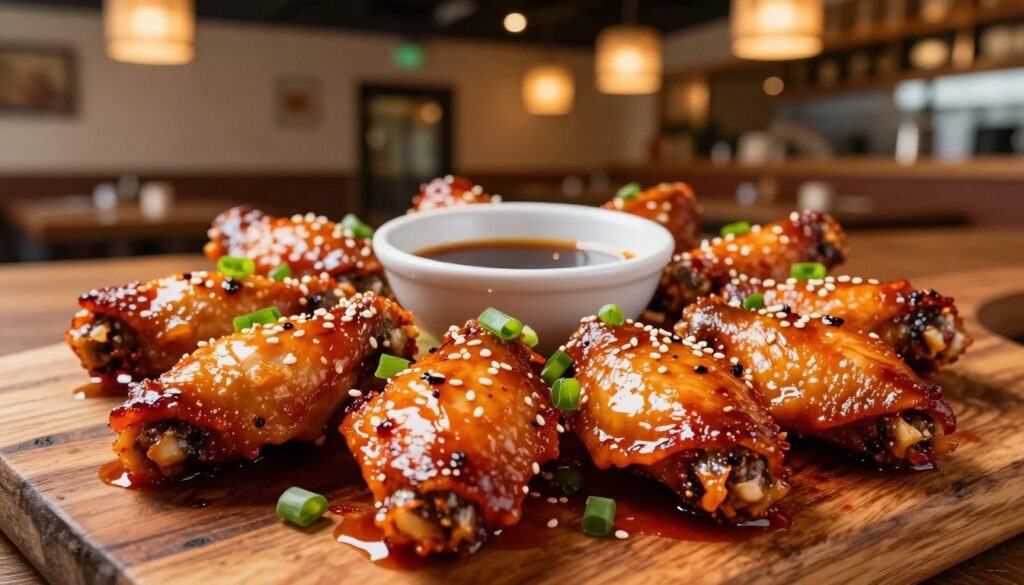
This sweet-heat option leans on ginger and soy for a savory backbone and a sriracha-style kick. It debuted in 2015 and later became a permanent pick for many fans.
Common tasting impressions
Tasters hear a clear soy depth up front, followed by garlic and ginger warmth. The overall taste reads sweet-and-sour with a peppery lift from crushed red pepper.
Split opinions you should know
Some reviewers praise it as a newer masterpiece with gochujang-like layers and sesame oil notes. Others detect a burnt or bitter edge when batches run hot or sit too long.
When to pick it and pairing tips
It works well in big mixed orders because it bridges mild and bold choices. Leftovers hold up — the sweet and savory notes survive reheating.
- Try a small order first if you dislike bitter finishes.
- Pair with Lemon Pepper or Plain to balance sweetness and darkness.
- Good for shared trays and leftover-friendly wings.
| Profile | Pros | Best pairing |
|---|---|---|
| Sweet-heat, soy & garlic base | Bridge flavor; reheats well | Lemon Pepper, Plain |
| Ginger and sriracha-style kick | Broad appeal; layered taste | Mixed orders, group trays |
| Can show bitter/char notes | Batch-dependent | Order small to sample |
Mango Habanero: the most divisive sweet-and-spicy pick
Mango Habanero divides a room: some order it every time, others take one bite and stop. It launched in 2013 and became a permanent option in 2014. Opinions have stayed split since.
Why many fans like it
Fans point to a bright mango top note that hits first. Then the habanero brings lively pepper heat. That fruit-then-burn arc plays well on fried chicken. Cheapism praised it as a sweet-and-spicy standout.
Why critics say it misses
Some tasters find habanero’s green, vegetal edge overwhelms the mango. Tasting Table argued the mango barely comes through in some batches. That makes the sauce feel pepper-forward rather than fruity.
- Set expectations: people either keep reordering or stop after one try.
- If you like fruit-forward sauces, try a small portion first.
- Prefer pepper-driven heat? It may be your pick.
- Balance tip: pair mango habanero with Lemon Pepper or Garlic Parmesan and keep ranch nearby to smooth the mouth.
| Aspect | What to expect | Quick fix |
|---|---|---|
| Sweet note | Mango upfront | Try small size |
| Heat profile | Habanero burn | Ranch or a dry rub |
| Common complaint | Vegetal habanero taste | Pair with a milder option |
For broader rankings and context, see this ranked list.
Hickory Smoked BBQ and Hawaiian: sweeter sauces that can get heavy fast
Not every sweet coating works for a full basket. These two sauces can feel dessert-leaning. They reward small portions and smart pairings.
Hickory Smoked BBQ notes
Hickory smoked wears a smoky-sweet coat. Some tasters say it smells very sweet and tastes more sugar than smoke.
Others detect a darker, soy-like edge that makes the sauce feel heavier. It often sits best on bone-in pieces. Tenders can feel overcoated.
Portion tip: try a 5-piece or split it with another flavor so the sweetness doesn’t dominate.
Hawaiian takes and advice
Hawaiian is a citrus-Asian sauce with strong fruit notes. Reactions split: some find it rich or artificial, others like the intensity.
Best move: order it in a mixed box. Pair with Lemon Pepper or Plain to give your palate a break between bites.
- Style: dessert-leaning, comforting but heavy in bulk.
- Try: small portions or as a fry dip.
- Protein match: bone-in handles thick BBQ better than tenders.
| Aspect | Hickory Smoked BBQ | Hawaiian |
|---|---|---|
| Primary character | Smoky-sweet, dark soy-like note | Citrus-Asian, fruity and rich |
| Best use | Small portions, bone-in, fry dip | Split box, pair with Plain or Lemon Pepper |
| Common issue | Too sweet or salty if overordered | Can taste artificial or overly rich |
Garlic Parmesan, Plain, and Mild: the “safe picks” that still deliver
When a group has mixed tastes, a few safe choices keep everyone happy. These three options focus on texture and familiar comfort. They are great for kids, picky eaters, and anyone who prefers low heat.
Garlic Parmesan as a dry rub with buttery carry
Garlic parmesan reads like a parmesan “snow” on top. It smells warm and garlicky. The rub gives buttery richness without adding heat. Crunch holds up better than with saucier picks.
Plain as a crispiness-first option
Plain highlights crisp skin and crunchy breading. The chicken takes center stage here. If you care most about texture, this is the choice.
Mild for low heat and classic comfort
Mild feels like old-school buffalo, but gentler. It delivers comfort without overwhelming the box. It’s the safe, familiar pick for a mellow game night.
- Order these as anchors for mixed groups.
- If you pick Plain, add a sauce on the side to control mess and intensity.
- Use them with one bold choice (Hot Honey Rub, Spicy Korean Q, or Atomic) as a “bonus lane.”
| Pick | Why choose it | Best with |
|---|---|---|
| Garlic Parmesan | Buttery dry rub, warm garlic aroma | Ranch, fries |
| Plain | Max crunch, chicken-forward | Side dip, travel |
| Mild | Low heat, nostalgic buffalo vibe | Kids, mixed groups |
Atomic: what to expect from Wingstop’s hottest flavor
Atomic is the no‑excuses, full-tilt hot choice you order when heat is the point.
Heat-first experience and why ranch may not save you
The first smell can be a Tabasco‑like, “on fire” aroma. The first bite gives a quick hint of sweetness, then heat lands immediately and lingers.
Ranch helps some people. For others it can bring out more burn. Don’t count on it to neutralize the intensity.
How sauce-heavy coatings change texture over time
Atomic is a saucy, wet coating. That means the sauce soaks into breading fast.
Over time, the crispness softens. If you’re carrying it home, expect soggier texture as time passes.
- Warning: atomic is a heat-first pick meant for people who want the burn.
- Smart move: order it as part of a split box so you can sample without tiring your mouth.
- Pairing plan: alternate Atomic with Lemon Pepper or Plain for palate breaks.
| Aspect | What to expect | Quick tip |
|---|---|---|
| Heat | Immediate, lingering | Split order |
| Ranch effect | Cool for some; amplifies for others | Bring extra dip |
| Texture over time | Sauce softens breading | Ask sauce on side for travel |
Full current flavor lineup overview (as tested nationwide in early 2025)
Use this quick roster to see which rubs keep crisp and which sauces bring bold, immediate taste. The Takeout tested 14 national options and flagged a rotating Sweet Chili Glaze as a limited-time standout.
Dry rubs to know
Lemon Pepper, Garlic Parmesan, Louisiana Rub, and Hot Honey Rub are the core dry options. Dry rubs give stronger aroma and less mess. They stay crisper during travel and work well on tenders and bone-in pieces.
Sauces to know
Original Hot, Mild, Atomic, Spicy Korean Q, Hickory Smoked BBQ, Hawaiian, and Mango Habanero are the wetter choices. Sauces offer bolder, immediate flavor. Expect richer coating and more chance of softening over time.
New and rotating flavors
Sweet Chili Glaze showed up as a limited-time hit. It blends sweet chili, hoisin, spicy red chili, and sesame seeds for crunch. Watch rotating drops — test runs often return as promos.
- Quick read: dry rubs = aroma, low mess; sauces = punch, higher mess.
- Tip: pick two to three top flavors before you build the best-value box.
| Style | Examples | Best traits |
|---|---|---|
| Dry rub | lemon pepper, garlic parmesan, louisiana rub, hot honey rub | Less mess, keeps crisp, aromatic |
| Sauce | original hot, mild, atomic, spicy korean q, hickory smoked bbq, hawaiian, mango habanero | Bold flavor, richer coating, softer over time |
| Rotating | Sweet Chili Glaze | Sweet + savory + sesame crunch; limited-time |
Wingstop flavors and prices in the United States: how to check your exact total
To see the real total, you need the app or the exact store page for your order. Prices are not fixed nationwide. They change by store, protein, and portion size.
Why prices vary by location, protein, and order size
Local rent, labor, and regional promotions change what you pay. Bone-in, boneless, tenders, and sandwiches each carry different base costs. Bigger counts raise the per-piece price in some locations.
How to get live prices fast
- Open the official app or site.
- Select your nearest store.
- Pick the protein and count you want.
- Add the exact sauces, rubs, and dips.
- Review the live subtotal, taxes, and fees before checkout.
What to scan for value and a printable menu table plan
Look for combos, family packs, and dip bundles. Check whether flavor swaps cost extra. Compare à la carte to combo pricing.
| Item | Size | Base price | Flavor add-ons | Dip & fees estimate |
|---|---|---|---|---|
| Bone-in pieces | 10 pc | $— (store) | $0.50–$1.50 | $1.50–$3.50 |
| Boneless | 8 pc | $— (store) | $0.50–$1.25 | $1.50–$3.50 |
| Tenders / Sandwich | Sandwich | $— (store) | $0.75–$2.00 | $1.50–$3.50 |
Smart ordering tips
- Mix a dry rub with a saucier option for texture balance.
- Split intense choices like Atomic or Mango Habanero across the box.
- Order at the counter for crispier chicken, or ask sauces on the side for delivery.
Your next Wingstop order, dialed in by taste, heat, and mood
Before you tap checkout, here’s a simple way to build an order that won’t disappoint.
Pick a classic combo (Original Hot or Mild + Lemon Pepper) for broad appeal. Try a sweet-heat combo (Hot Honey Rub + Spicy Korean Q) when you want layered taste. For travel, choose two dry rubs to lock in crisp texture. If heat is the point, pair Atomic with a neutral dip and one milder lane for relief.
Use this quick checklist: include one cool lane, add one intense lane, plan dips, and consider time — rubs hold up better if you eat later. Pick your top two ones now, check local prices, and enjoy every bite with less fuss and more flavor in the mouth.