Subway Menu Calories
This quick guide helps you check calorie counts and plan a meal that fits your day. It covers sandwiches, wraps, salads, No Bready Bowls®, breakfast items, pizza, sliders, and sides. Use the jump links or tables to skip to a category. Double portions? Use the “double for footlong” tips to estimate totals fast.
All numbers use U.S. nutrition information from Jan 2025 tables. Your totals can shift based on how a sub is built. Core disclaimer: nutrition values are estimated from standard portions and may vary about ±10% each visit.
We frame calories against the common benchmark of 2,000 calories per day. That is general advice. Your needs may be higher or lower.
You’ll also find practical takeaways on how bread, protein, cheese, sauces, and add-ons change totals quickly. Real Time Price varies by location; price modules are included, but you’ll always see the nutrition facts and clear information to help you decide before you order.
Subway Menu Calories: Find Calorie Counts by Category
Use the on-site filters to narrow options by availability and a calorie ceiling. Start with what you plan to order, then fine-tune with the calorie filter for an easy shortlist.
How to use the filters and search
Choose “Available” or “Discontinued” in the Show items control. Then set “Filter by Calories (≤ calories)” to cap results.
- Type a sandwich name in Search the menu to jump to its row and check the value in the table.
- Pick the category first (sub, wrap, salad), then apply the calories cap last for simple results.
Badges, availability, and personalization
“Voted a healthy and tasty option” marks items that are lower in fat or higher in veg. It helps you spot better-for-you picks while you browse.
“Discontinued” means most locations no longer carry the item. “Available” flags current offerings so you won’t chase a retired choice.
Many sites let you save settings and preference with tools to receive personalized recommendations. Note: ads or advertising and interest-based feeds can change what you see on some pages.
What to do next: jump to the category sections below to see the actual numbers and compare types at a glance.
| Control | Action | Result |
|---|---|---|
| Show items | Select Available/Discontinued | Filters list by status |
| Calories | Set ≤ value | Limits choices to your cap |
| Search | Enter name | Jumps to item and table row |
How Calorie Counts Are Estimated (and Why Yours May Vary)
Estimating what’s on your plate starts with standard serving rules and a few practical assumptions.
The listed numbers come from a standard build and portion sizes. The company notes a common ±10% variance per visit. That range covers small scoop differences, freer-poured sauces, and slightly different protein portions.
Standard serving portions and variance
Each item is created from a defined recipe. Nutrition values are estimated from those standard serving portions and are usually within ±10%.
Why toppings and build choices change totals
- Sauces: a heavier scoop of mayo or ranch creates the largest swing.
- Cheese and add-ins: extra slices, avocado, or double protein raise totals fast.
- Portioning: a fuller scoop or extra drizzle is common at busy counters.
Daily context and reading the label
The 2,000-calorie guideline is a general reference. Your needs may differ if you are a child, athlete, or traveling long hours.
Think of the nutrition facts as a reliable baseline, not a guarantee to the last unit. Some site elements use interactive label label blocks and performance widgets to show numbers; other pages have label label label components tied to the website design. Use ingredient listings to add sauce or protein calories when you customize.
| Factor | Typical impact | Why it matters |
|---|---|---|
| Sauces (mayo, ranch) | +50–200 per serving | High fat and volume vary by scoop |
| Extra protein / cheese | +40–180 per add-in | Slices and doubles add calories quickly |
| Build style (bowl vs bread) | −50 to +100 | Removes bread or adds extra toppings |
6″ Series Sandwich Calories (Signature Menu)
Scan the 6″ lineup to compare lighter builds against the heartier, stick-to-your-ribs choices.
Deli Heroes highlights and ranges
Classic deli picks sit in the midrange. Titan Turkey (500) and Garlic Roast Beef (490) are under the heftier Homerun Ham and The Beast (740).
Cheesesteaks highlights and ranges
Cheesesteaks stay close together. The Philly, Cheesy Garlic Steak, and The Outlaw® all sit around 490–510.
Italianos highlights and ranges
Italian-style builds run higher. The Boss (690) and Firey Meatball (670) are heavy. The Ultimate B.M.T.® is a midrange choice at 560.
Chicken sandwiches highlights and ranges
Chicken options vary by build. All‑Pro Sweet Onion Teriyaki is lighter at 430. Elite Chicken & Bacon Ranch climbs to 580. Note: Spicy Nacho Chicken ranges 440–480 depending on bread choice.
Clubs highlights and ranges
Club sandwiches fall in the 500–540 band. All‑American Club® is 540; Subway Club® is 500. These are protein-forward picks that add calories with bacon and cheese.
| Family | Example | 6″ Value | Real Time Price |
|---|---|---|---|
| Deli Heroes | Titan Turkey | 500 | RT Price (dynamic) |
| Cheesesteaks | The Philly | 510 | RT Price (dynamic) |
| Italianos | The Boss | 690 | RT Price (dynamic) |
| Chicken | All‑Pro Sweet Onion Teriyaki | 430 | RT Price (dynamic) |
| Clubs | All‑American Club® | 540 | RT Price (dynamic) |
Fresh Fit note: pick lean proteins and pile on veggies for a more balanced feel. Footlong math: two 6″ servings usually equal one footlong for planning purposes.
Build Your Own 6″ Subs: Calories for Classic Favorites
Choose a 6″ favorite and see how small swaps change the total at a glance.
Lower-calorie picks
Start lean with these baselines if you want a lighter meal. Veggie Delite® — 220 kcal. Oven Roasted Turkey — 270 kcal. Black Forest Ham — 280 kcal.
Mid-range classics
These bring more protein and heft without going overboard. Grilled Chicken — 300 kcal. Roast Beef — 300 kcal. Rotisserie-Style Chicken — 310 kcal. Cold Cut Combo® — 330 kcal. Steak (with American cheese) — 370 kcal.
Higher-calorie options
Richer fillings raise totals quickly. Buffalo Chicken (with Grilled Chicken) — 390 kcal. Meatball Marinara — 460 kcal. Tuna — 480 kcal.
- Practical approach: pick a lower baseline (Veggie Delite® 220 or Turkey 270) and add low-cal condiments for flavor.
- Why Tuna and Meatball run higher: fattier mixes and richer sauces increase density and fat content, so totals climb.
- Sub Day planning tip: rotate proteins and sauces across the week to keep daily totals steady and predictable.
- Note: adding cheese, double meat, or heavy sauces will raise these numbers. See the ingredients section for exact add-on impacts.
| Classic Favorite | 6″ Baseline (kcal) | Real Time Price |
|---|---|---|
| Veggie Delite® | 220 | RT Price (varies) |
| Oven Roasted Turkey | 270 | RT Price (varies) |
| Grilled Chicken | 300 | RT Price (varies) |
| Meatball Marinara | 460 | RT Price (varies) |
Wrap Calories: Subway® Series Wraps and Make-Any-Sub-a-Wrap
Choosing a wrap changes more than shape — it changes your meal math. Wrap bread lists 280 calories, and many series wraps use larger protein portions. That raises totals fast.
Why some wraps run higher
Series wraps often include footlong-style meat portions and richer sauces. The extra protein plus the 280-wrap base explains big jumps versus a 6″ sub.
Build-Your-Own as a wrap
Simple swaps show the effect. Pick lean proteins and light dressings to keep totals lower. A protein pockets tip: choose turkey or grilled chicken and skip heavy mayo.
Limited-time and regional wraps
Specials can be calorie standouts. Big Hot Pastrami and other regionals change by location, so availability and totals may function differently where you order.
| Item | 6″ (kcal) | Wrap (kcal) |
|---|---|---|
| Tuna | 480 | 800 |
| Grilled Chicken | 300 | 460 |
| Veggie Delite® | 220 | 310 |
| Hotshot Italiano (series) | — | 950 |
Big wrap standouts: Hotshot Italiano (950) and Elite Chicken & Bacon Ranch (830). Use the Real Time Price slot below for local pricing and add-on costs. Note: digital services may affect how orders display on your device.
Salad Calories: Subway® Series Salads and Make-Any-Sandwich-a-Salad
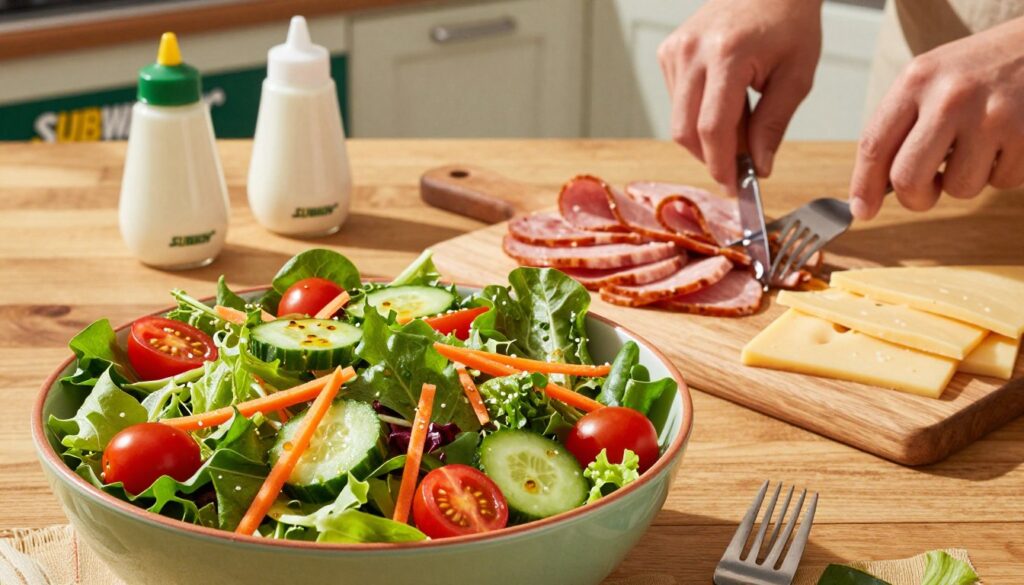
Salads offer a simple way to pare down your meal while keeping flavor and volume.
Series salads list standard vegetables and typical protein portions. They do not include dressing unless the value is noted. That keeps the base numbers more predictable.
What’s included and what’s not
- Included: mixed greens, tomatoes, cucumbers, onions, peppers, and the listed protein.
- Not included: dressing, extra cheese, avocado, or toasted add-ons unless explicitly stated.
- Tip: request measured dressings to manage added fat and sugar.
| Series Salad | Value (kcal) | Real Time Price |
|---|---|---|
| Subway Club® salad | 240 | RT Price (dynamic) |
| All‑Pro Sweet Onion Chicken | 300 | RT Price (dynamic) |
| Titan Turkey | 430 | RT Price (dynamic) |
| The Beast | 570 | RT Price (dynamic) |
| Make Any Sandwich a Salad | Value (kcal) | Real Time Price |
|---|---|---|
| Veggie Delite® → salad | 50 | RT Price (dynamic) |
| Oven Roasted Turkey → salad | 110 | RT Price (dynamic) |
| Grilled Chicken → salad | 130 | RT Price (dynamic) |
| Tuna → salad | 310 | RT Price (dynamic) |
Where totals creep back up: cheese, avocado, and especially dressings. A measured vinaigrette or light scoop keeps a Fresh Fit feel without losing flavor.
Use the salads section for predictable ordering. Some platforms will offer personalized recommendations. Here you get the same clear baseline facts to help plan your meal and receive personalized recommendations where available.
No Bready Bowls® Calories: Breadless Options and Footlong Conversions
Going breadless keeps the signature tastes but shifts portion math and meal balance.
What to expect versus a sandwich
A No Bready Bowl® uses a vegetable-forward base with the same protein and toppings from a signature build. You get volume from greens and the familiar flavors without the roll.
How serving size changes totals
Making any footlong a bowl alters portions. The bowl often uses full footlong protein portions, so numbers do not match a 6″ build.
- Series bowl examples: The Beast 1080; Hotshot Italiano 860; Elite Chicken & Bacon Ranch 760.
- Make-any-footlong examples: Oven Roasted Turkey bowl 150; Grilled Chicken bowl 200; Tuna bowl 550.
- Limited/regional bowls to watch: Big Hot Pastrami 680; Pizza Sub 610.
| Item | Value (kcal) | Real Time Price |
|---|---|---|
| Oven Roasted Turkey → bowl | 150 | RT Price (varies) |
| Grilled Chicken → bowl | 200 | RT Price (varies) |
| Meatball Marinara → bowl | 560 | RT Price (varies) |
Tip: save your favorite build in the site tools or adjust order settings so you get the same protein and add-ons each visit. Small swaps (lighter dressing, no cheese) lower totals fast.
Breakfast, Pizza, and Sliders: Calorie Counts for Non-Sub Menu Items
Start the day with clear numbers so you can pick the breakfast that fits your plans. Below you’ll find side-by-side values and quick notes to help you choose without guesswork.
Egg-and-cheese builds: flatbread vs artisan Italian
Flatbread builds generally list fewer calories than the same egg-and-cheese combo on artisan Italian.
| Item | Value (kcal) | Real Time Price |
|---|---|---|
| Egg & Cheese Flatbread | 360 | RT Price (varies) |
| Bacon, Egg & Cheese Flatbread | 440 | RT Price (varies) |
| Steak, Egg & Cheese Flatbread | 430 | RT Price (varies) |
| Egg & Cheese on Artisan Italian | 430 | RT Price (varies) |
| Bacon, Egg & Cheese on Artisan Italian | 510 | RT Price (varies) |
| Steak, Egg & Cheese on Artisan Italian | 500 | RT Price (varies) |
8″ pizza choices
| Variety | Value (kcal) | Real Time Price |
|---|---|---|
| Cheese | 700 | RT Price (varies) |
| Bacon | 780 | RT Price (varies) |
| Meatball | 810 | RT Price (varies) |
| Pepperoni | 780 | RT Price (varies) |
Sliders: kid-friendly and snack options
Slider counts include the bun, listed protein, and a standard slice of cheese or sauce when applicable.
| Slider | Value (kcal) | Includes | Real Time Price |
|---|---|---|---|
| Ham & Jack | 160 | Ham, Jack Cheese | RT Price (varies) |
| Italian Spice | 250 | Cured meat, sauce | RT Price (varies) |
| Little Cheesesteak | 180 | Steak, Cheese | RT Price (varies) |
| Turkey | 210 | Turkey, Light Sauce | RT Price (varies) |
- What’s included: counts cover bread + egg + cheese and meat when listed. Add sauces or cheese and totals rise.
- Pairing tip: if you pick pizza, keep sides light. Treat sliders as a snack or starter, not a full meal.
- Real Time Price modules appear on the website pages for local availability and pricing information.
Sides, Cookies, Chips, and Desserts: Calories Beyond the Sub
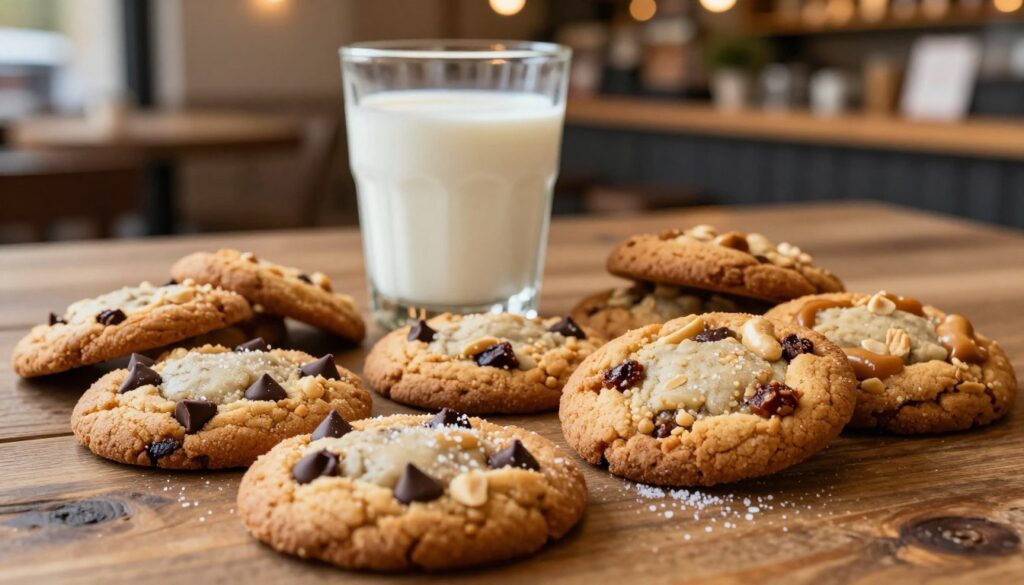
Small add-ons often deliver big energy — and they add up faster than you think.
One cookie is usually around 200–210 kcal. That amount is fine as an occasional treat. But a footlong cookie is an entirely different meal choice.
Cookie guide and Footlong reality check
Here are the per-cookie values so you can scan and decide quickly.
- Chocolate Chip — 210
- Double Chocolate — 210
- Oatmeal Raisin — 200
- Raspberry Cheesecake — 210
- White Chip Macadamia — 210
| Footlong Cookie | Value (kcal) | Real Time Price |
|---|---|---|
| Chocolate Chip Footlong Cookie | 1330 | RT Price (varies) |
| Double Chocolate Peppermint Footlong Cookie | 1330 | RT Price (varies) |
| Oreo Footlong Cookie | 1210 | RT Price (varies) |
Popular add-ons and how they shift a meal
Pick one treat or one snack, not both. That keeps a lighter meal from ballooning.
| Side | Value (kcal) | Real Time Price |
|---|---|---|
| Footlong Churro | 190 | RT Price (varies) |
| Footlong Pretzel | 330 | RT Price (varies) |
| Dippers | 400–470 | RT Price (varies) |
| Doritos® Footlong Nachos | 550–600+ | RT Price (varies) |
| Broccoli Cheddar (8 oz soup) | 200 | RT Price (varies) |
| Chicken Noodle (8 oz soup) | 70 | RT Price (varies) |
| Loaded Baked Potato w/ Bacon (8 oz) | 200 | RT Price (varies) |
Remember: chips, a cookie, and a drink can push a simple lunch well past your daily target. Use the site tools or services to check local pricing and promotions before you order.
Breads, Proteins, Cheese, and Sauces: Build a Lower-Calorie Subway Order
Small swaps in bread, protein, cheese, and sauce add up to a lighter, satisfying order. Below are clear ingredient numbers so you can build smarter without surprises.
Bread and wrap at a glance
Flatbread starts low at 140. Hearty Multigrain is 200. Artisan Italian is 210. Wraps add more upfront at 280. Specialty loaves like Italian Herbs & Cheese (250) and Ghost Pepper (240) sit higher.
Protein impact
Leaner picks: Oven Roasted Turkey 60, Black Forest Ham 70, Roast Beef 80, Grilled Chicken 80. Higher items: Steak 110, Tuna 250, Meatballs 250, Chicken Salad 380.
Cheese and sauce swaps
American adds 40. Most slices are 50. Garlic Herb Cheese Spread is 80. Sauces vary: mayo 100, ranch/aioli 80, baja chipotle 70, honey mustard 60. Low-swing choices: mustard 10, BBQ 25, red wine vinegar 0, sweet onion teriyaki 30.
Veggies and footlong math
Most vegetables are near 0–5 per scoop. Avocado is 45 sliced or 70 smashed. One footlong equals two 6″ servings, so double ingredient values. Note: double sauce values often apply for salads.
| Ingredient | 6″ Value (kcal) | Tip |
|---|---|---|
| Flatbread | 140 | Lower base choice |
| Oven Roasted Turkey | 60 | Lean protein |
| American Cheese | 40 | Light slice |
| Mayonnaise | 100 | Skip or halve to save |
- Build smarter: multigrain + turkey + lots of veg + mustard/vinegar.
- Add-ons checklist: cookies and chips can push totals; choose one treat like a cookie or a small bag of chips.
- Site note: some sites use cookies and performance tools to analyze site behavior or allow cookies so services may function properly. You can view ingredient labels and still choose without sharing extra personal information.
Keep Your Menu Picks Personalized Without Guesswork
Finish your order routine with a quick three-step check so choices stay simple. Pick the category, confirm availability (Available vs Discontinued), then tweak bread, protein, and sauce using the ingredient label numbers and the ±10% variance note.
Save a few default builds in your account or device—one lighter sub, one wrap, one salad. Use site tools and settings to keep preferences across pages and for family orders on Sub Day.
Some website pages allow cookies so services may function properly, improve performance, analyze site use, and support ads or advertising tied to interest. You control what they collect; collect personal information usually means saved preferences or location for pricing.
Screenshot or print a short label-style breakdown (bread + protein + cheese + sauce) for quick ordering. Trust the baseline, mind your sauces, and enjoy one cookie or treat at a time.
Try the real-time nutrition calculator to save builds and receive personalized recommendations.