Does Subway Have Pizza
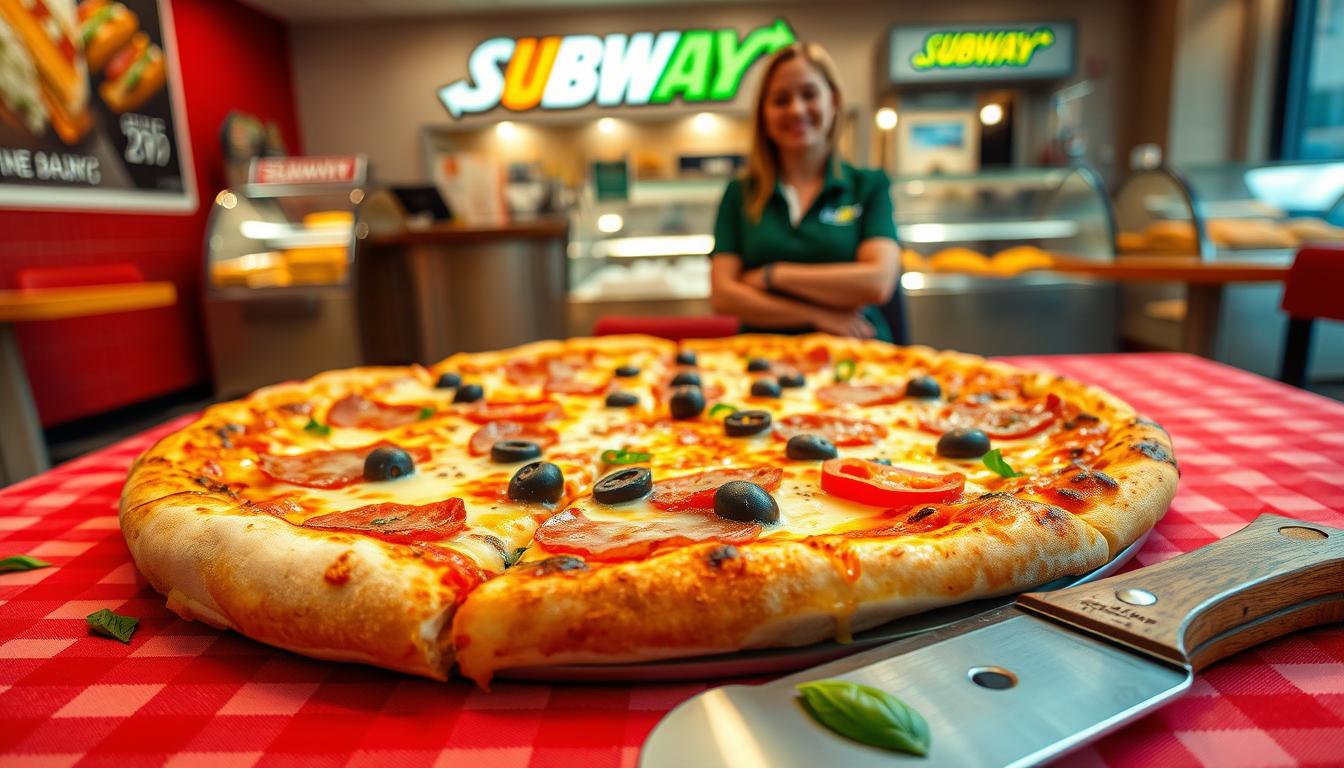
Subway added a pizza option in 2006, and the item still appears at some U.S. locations today. The answer can be both yes and no depending on the store and regional menu choices.
Remember that Subway is primarily a sandwich chain, so pizza is a quieter, less-promoted choice that many customers miss. When offered, the product is usually a personal-sized item built from a ready-to-bake base and finished in the same oven used for toasted subs.
This short guide explains how to confirm availability at your local shop, what the item typically tastes like, and simple ways to customize it. Practical checks—online menu listings and a quick phone call—give the fastest, most reliable answer for your area.
“Worth it” here means convenience and customization, not direct competition with dedicated pizza shops. If you want a quick, made-to-order hot option while ordering a sandwich, many locations that keep the item offer decent value and flexibility.
Does Subway Have Pizza
Some franchise spots keep a personal pie on hand, but it’s often a quiet, behind-the-counter option. Availability is spotty across the country, so one visit may show the item while another nearby store won’t offer it.
Yes, but only at some U.S. stores
The short answer: the chain sells pizza in the United States, but not at every location. That explains why two customers in the same city can report different experiences.
Why it may not show up on menus or apps
Some shops treat the item as a secondary menu choice. It might be omitted from in-store boards to avoid clutter. Digital menus often reflect franchise settings, so the app can look incomplete for certain locations.
| Channel | Why item may appear | Why it may be absent |
|---|---|---|
| In-store menu board | Local manager lists it as an offered item | Not promoted to save board space |
| Online ordering / app | Franchise enabled pizza on digital menu | Franchise turned feature off or not configured |
| At the counter | Staff can bake a personal pie on request | Kitchen lacks stock or oven time |
Common official-style builds include cheese, pepperoni, and veggie options. The best way to confirm is to call ahead or check with staff. For a quick review of who sells it and typical builds, see this short write-up: subway pizza review.
Where Subway pizza is sold and how to check your local store

A quick check of the exact store menu is the fastest way to confirm whether a personal pie is offered at your nearby location. Start by picking the specific store on the chain’s website or app and browse section-by-section for a pizza listing.
Using the online menu to confirm availability
If the menu shows a pizza entry, you’re set. If it’s missing, the item may truly be unavailable or simply disabled for that digital profile.
Calling or asking in person
Call the store and use this short script: “Hi, do you currently have personal pizzas in stock today? What styles do you have?” That saves a trip if the online menu is incomplete.
Why availability varies across locations
Differences come down to franchise decisions, oven and prep space, and local demand. Limited awareness can lower sales, so some subway locations choose not to stock the item consistently.
- Pick the exact store online and scan the menu.
- Call before you go if the listing is unclear.
- Ask staff in person; they can confirm stock even without signage.
What Subway pizza actually is: size, style, and menu options
The offering is a personal-sized pie made for one. It’s not a large, shareable tray but a quick hot meal you can eat solo.
Personal size and typical cut
Most shops serve the pie cut into quarters. That makes it easy to eat by hand or share a bite if needed.
Standard choices you’ll see
Common named options include cheese and pepperoni. Veggie usually means toppings pulled from the sandwich line, like onions, peppers, and tomatoes.
Add-ons and ordering notes
Bacon often appears as an extra-charge topping. On paper the menu can look limited, but in-store orders usually allow more customization than online items show.
- Personal serving — not meant for a group.
- Cut in quarters for convenience.
- Named options: cheese, pepperoni, veggie; bacon as add-on.
Toppings and customization: ordering online vs ordering in person
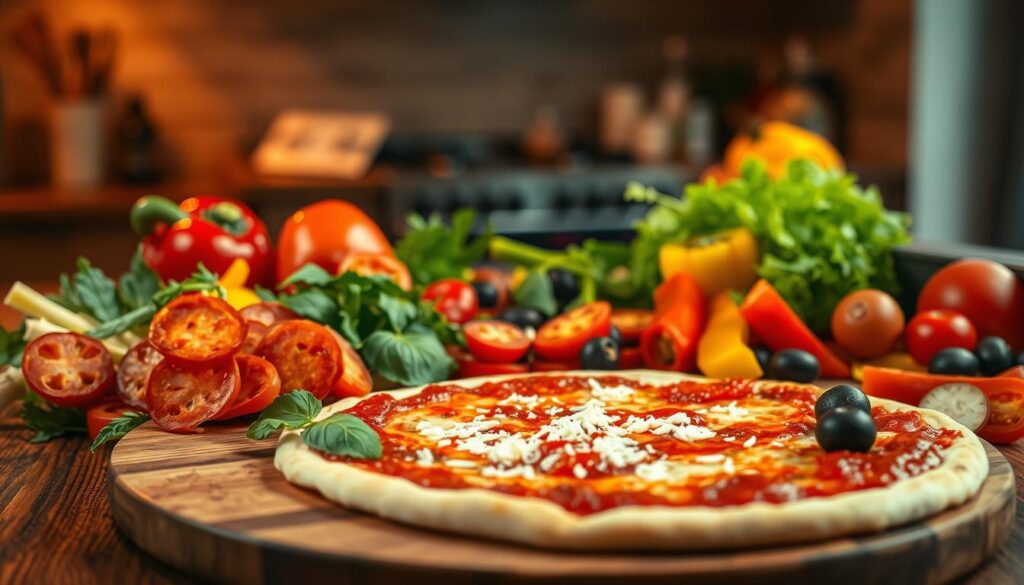
Digital ordering may limit what you see, but the sandwich line often holds extra ingredients you can request. Online menus tend to show a short, location-specific list. In contrast, staff at the counter can usually add items from the prep station.
Online limits and common vegetable examples
Some digital menus restrict choices to a few vegetables. Typical online options include spinach, tomatoes, green peppers, black olives, red onions, and jalapeños.
In-store flexibility
At the counter, employees may let you pull from the full sandwich line. That means you can often add sliced meats, extra cheese, and more veggies than the app lists.
Popular combos and how to build it like a sandwich
For bold flavor, load it with onions and peppers — add jalapeños or banana-pepper style heat if available. Start with a standard option, add meat, pile on vegetables, then finish with extra cheese to bind everything together.
- Key difference: app = limited list; in person = more options.
- Ask politely about what’s possible each visit; availability can change by shift.
- The real advantage is the familiar topping bar that mimics sandwiches, not gourmet dough.
| Ordering method | Typical flexibility | Best use |
|---|---|---|
| Online | Location-limited toppings list | Quick orders, predictable choices |
| In person | Access to sandwich line ingredients | Custom builds, extra meats and cheese |
| Phone call | Ask before you go | Save time and confirm options |
How Subway pizza is made: crust, base, sauce, and oven method
At many locations the process begins with a refrigerated, par-baked cheese base rather than fresh dough. That pre-made base cuts prep time and keeps the product consistent across shifts.
The crust is thick and doughy, built to warm quickly with a soft bite instead of a crisp snap. A classic sauce-and-cheese layer sits on the base when it arrives, so staff work from a ready foundation.
Teams often add extra shredded cheese on top to lock toppings in place. For meat-forward builds, employees may warm slices first, then add vegetables and a final cheese layer before the last bake.
Quick process highlights
- Start: chilled, par-baked base with sauce and cheese.
- Toppings: meats warmed when needed, then layered with veggies.
- Finish: extra cheese added to anchor toppings, then a short bake.
| Component | Typical trait | Effect on final slice |
|---|---|---|
| Base | Refrigerated, par-baked round | Fast heating, uniform texture |
| Crust | Thick, doughy | Soft bite, not stone-crisp |
| Sauce & cheese | Classic tomato sauce with pre-applied cheese | Consistent flavor, simple prep |
| Oven method | Rapid convection/toaster oven | Quick finish; sandwich-style texture |
Because the equipment is optimized for toasted sandwiches, expect a fast-food convenient result rather than a pizza-parlor crisp. For a clear local example, ask staff about the two-heat method when ordering a subway pizza.
What it tastes like and when it’s worth ordering
Expect a soft, bread-like bite rather than a crisp crust when you order a personal pie from selected locations. The base feels thick and pillowy. You’ll notice melted cheese and toppings more than a browned, crunchy bottom.
The product lands closer to convenience-store slices than to major chains like Domino’s or Little Caesars. It can beat a frozen pie at home, but it does not match a full-service pizza parlor for crispness or crust development.
When this option makes sense
Pick it if you want a break from sandwiches, are on the road with few choices, or are feeding someone picky. The real win is customization: add extra cheese, toss on bacon, or pile on onions for better flavor.
Quick decision rule
- If you want great pizza, go to a pizza place.
- If you want a fast, pizza-ish hot meal with sandwich-style toppings, this can work.
| Feature | Expectation | Best use |
|---|---|---|
| Crust | Thick, soft | Comfort-style bite |
| Flavor | Melted cheese, simple sauce | Quick hot meal |
| Customization | High (toppings from sandwich line) | Personalized orders |
Other ways to get “pizza” at Subway without ordering a pie
Many stores can craft a pizza-style sub using the standard sandwich line ingredients.
Ask for tomato sauce, extra cheese, and classic toppings like pepperoni and olives. Tell staff you want it toasted so the cheese melts and the bread warms through.
Secret-menu names vary, so describe the ingredients instead of relying on a term from the menu or staff memory.
For a richer bite, add bacon and extra cheese. It still reads as a sub, but the result tastes closer to a hot personal pie.
If the pie item is missing at your local locations, try this approach or call another nearby store to check stock before you go.