Is Subway Healthy
Quick answer: this chain can be a sensible fast food pick, but most real orders fall short. Health and nutrition depend on portion size, protein choice, and add-ons more than the brand name.
For U.S. diners, “healthy” means a meal that fits your day for calories, sodium, protein, and fiber. The FDA recommends under 2,300 mg of sodium daily, and many experts suggest aiming lower to protect blood pressure.
There’s a clear “health halo” around the Eat Fresh message. That makes people underestimate calories and sodium in popular picks.
This article compares real purchases — not just best-case builds — and will show practical levers you can control without tracking: size, portion discipline, bread, lean protein, extra vegetables, and sauces on the side.
We’ll also compare choices with McDonald’s using published purchase data and give ordering rules plus specific items that tend to work and common add-ons that spike totals.
Use this guide by skimming the healthiest picks, then apply the simple framework to customize any sub. Read more on nutrition and menu.
Is Subway Healthy? The “Eat Fresh” Health Halo vs. What Your Order Really Adds Up To

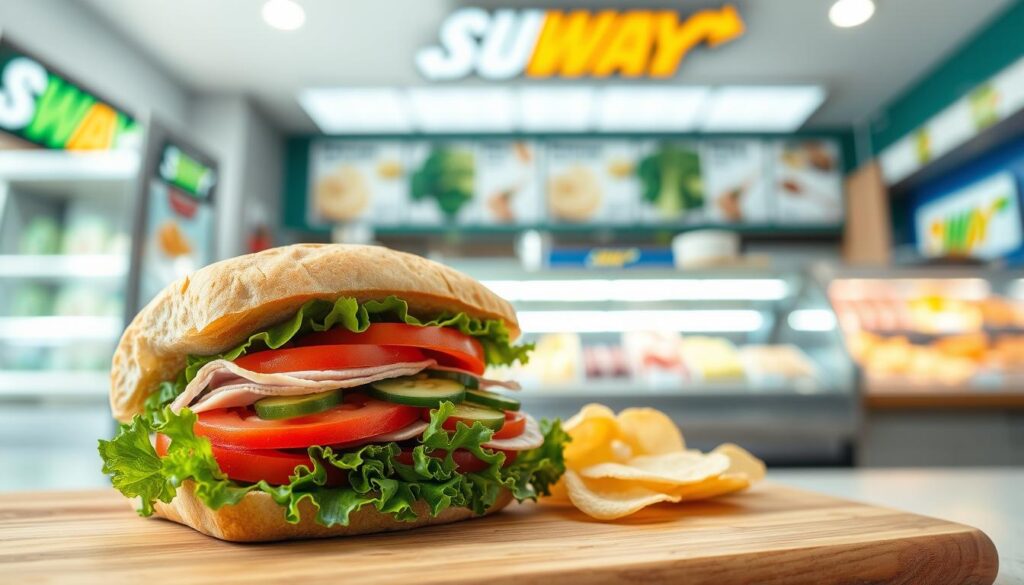
A bright, made‑in‑front‑of‑you sandwich can trick your brain into calling it a smart choice.
Visible vegetables and assembly cues create an appealing health halo. That perception often outruns the actual nutrition math. People skip checks for portion size, cheese, sauces, and processed meat.
Here’s how orders go wrong: a footlong equals two 6‑inch servings, so calories and sodium usually double if you eat the whole thing as one meal. Wraps can mislead too — some hit about 820–830 calories and push sodium near or past daily targets.
- Bread or wrap base: adds carbs and a baseline sodium amount.
- Processed meat: big jump in sodium per slice.
- Cheese and creamy sauces: stack more sodium and saturated fat.
- Final add‑ons: chips, cookies, or a soda can finish the overload.
| Layer | Typical Calories | Typical Sodium (mg) | Effect |
|---|---|---|---|
| Bread / Wrap | 150–300 | 200–500 | Base carbs and sodium |
| Processed meat | 100–400 | 400–1,200 | Major sodium contributor |
| Cheese & Sauce | 100–300 | 200–600 | Raises calories and thirst |
| Full meal total (example) | 700–1,200+ | 1,500–2,500+ | Can approach or exceed daily limits |
Even when calories seem reasonable, sodium stacking can make one meal feel heavy and leave you thirsty or sluggish. The next section compares real purchases to other fast food so you can judge choices by totals, not appearances.
Subway vs. McDonald’s: Calories, Protein, Sugar, and Sodium Compared in Real Purchases
When teens buy fast food, the totals tell a different story than the ads. Lesser et al. (2013) looked at real adolescent purchases and found total calories were similar: McDonald’s averaged 1,038 calories versus 955 calories at the other chain. That difference was not statistically significant, so choosing one brand does not guarantee fewer calories.
The breakdown explains why. The typical sandwich at the healthier-feeling outlet packed about 784 calories versus 572 calories at McDonald’s. Drinks and sides flipped that pattern: drink calories were 61 versus 151, and side calories were 35 versus 201. Sugar totaled 36 grams versus 54 grams, while protein leaned toward the sandwich chain (41 grams vs 32 grams).
What the numbers mean for your meal
Sodium is the biggest concern. Average sodium hit 2,149 mg at the sandwich chain and 1,829 mg at McDonald’s, near or above daily limits for many people. Higher grams protein can help you feel full, but the sodium tradeoff matters for blood pressure and thirst.
| Metric | Subway (real purchases) | McDonald’s (real purchases) |
|---|---|---|
| Total calories | 955 | 1,038 |
| Sandwich calories | 784 | 572 |
| Drink + side calories | 96 | 352 |
| Protein | 41 g | 32 g |
| Sodium | 2,149 mg | 1,829 mg |
Key takeaway
Total calorie intake drives weight and weight loss more than brand image. To improve outcomes, focus on portion sizes, sides, and drinks when you build any meal. The next section lists specific menu builds that cut calories and sodium while keeping satisfaction.
Healthiest Subway Menu Items vs. the Options That Quietly Spike Calories and Sodium
A few repeatable orders deliver good nutrition numbers; others quietly undo your effort.
Best lighter picks
Stick to simple items that keep calories and sodium lower. The 6-inch Veggies Delite is the lowest at 220 calories and 360 mg sodium. It’s the best repeatable pick when you want volume with minimal energy.
The 6-inch Oven Roasted Turkey (270 calories, 810 mg sodium) and the 6-inch Rotisserie-Style Chicken (310 calories, 750 mg sodium) add lean protein. They help you feel full without a big jump in calories.
Portion-control and no-bread choices
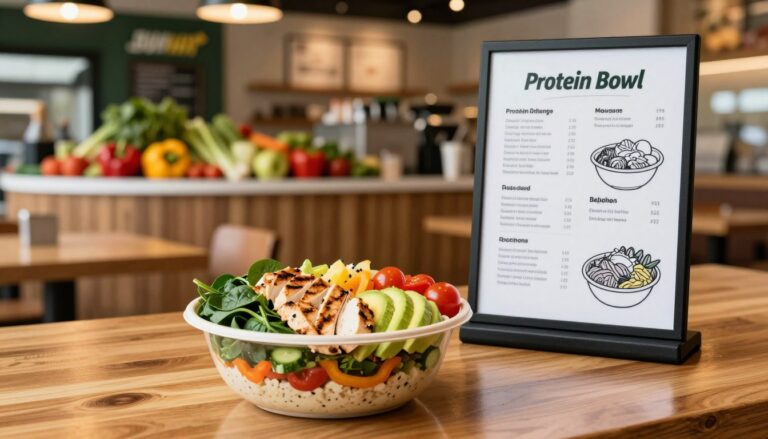
For smaller meals, a kids’ mini sub (Turkey, 170 calories) works well. A salad or a protein bowl no-bread build cuts carbs and trims bread-driven calories.
Quiet spikes and combo traps
Wraps labeled light can still spike totals. Example wraps hit 820–830 calories and 1,850–2,430 mg sodium. Footlongs eaten as one meal double calories and sodium. Creamy sauces and cheese add calories fast.
| Item | Calories | Sodium (mg) | Note |
|---|---|---|---|
| 6-inch Veggies Delite | 220 | 360 | Lowest calories; low sodium |
| 6-inch Oven Roasted Turkey | 270 | 810 | Lean protein, moderate sodium |
| 6-inch Rotisserie-Style Chicken | 310 | 750 | Protein-forward, filling choice |
| Kids’ Mini Sub (Turkey) | 170 | — | Smaller portion for lighter hunger |
Don’t let a cookie, chips, or a 16 oz soda add back 30+ g sugar or another 200–300 calories. Next, you’ll get a simple ordering framework that works without tracking every calorie.
How to Eat Healthy at Subway Without Tracking Every Calorie
Small, consistent choices at the counter beat perfect tracking for most people. Start with a clear default and you’ll change intake without feeling deprived.
Choose the right size
Make a 6-inch sub your standard. Treat a footlong as two meals and save half for later. Size control is the easiest lever to cut calories and sodium while keeping the tastes you like.
Pick better bread
Opt for multigrain for extra fiber and steadier energy. Refined artisan or large rolls can push carbs and calories higher than you expect.
Prioritize lean protein
Choose turkey or rotisserie-style chicken over bacon, salami, pepperoni, or meatballs. These lean proteins keep protein up while lowering sodium and saturated fat.
- Load up on vegetables: spinach, tomatoes, cucumbers, peppers, and onions add volume and micronutrients with minimal calories.
- Control sauces: mustard, vinegar, or a splash of olive oil; request dressing on the side to use less.
- Go light on cheese and add-ons: a small change like skipping two bacon strips saves sodium and saturated fat.
| Rule | Why it works | Quick tip |
|---|---|---|
| 6-inch default | Reduces calories by half vs. footlong | Save half for later |
| Multigrain bread | More fiber, steadier blood sugar | Avoid large artisan rolls |
| Lean proteins | Lower sodium and saturated fat | Pick turkey or rotisserie-style chicken |
Balance your day
If lunch is a sandwich, keep other meals lower in packaged sodium and rich fats. That simple balance helps total daily intake stay within healthy ranges.
The Bottom Line: When Subway Is a Solid Fast-Food Choice—and When Another Option Might Be Better
Is Subway Healthy? It can be, but only when you order with intention. A clear ordering habit is the simplest way to make a chain meal fit your day.
Pick a 6-inch, choose lean protein like turkey or rotisserie-style chicken, load vegetables, and keep sauces light. Those steps keep calories, sodium, and protein balanced in one meal.
Choose another option if you’re already near your sodium limit for the day, want a lower-sodium meal, or know you’ll default to a footlong, wrap, and sides. Real-purchase data show total calories often match other chains while sodium can be higher.
Quick counter checklist to remember: size first, protein second, veggies always, sauces last. Use this short guide for menu information when you want details.
Don’t chase the brand’s image. Treat each visit as a chance to build a repeatable, nutrition-friendly meal that fits your weight and health goals for the day.