Subway Nutrition Menu
This page gives you clear nutrition information and local, real-time prices so you can order with confidence. The menu filter was updated 1/21/2026 to reflect availability and calorie options, while numeric prices may vary by store.
You’ll find practical values for sandwiches, salad bowls, wraps and breakfast items. We organize items by size and build—6-inch vs footlong, bread choice, and add-ons like cheese, bacon, or sauces—to match how you think when you order.
Expect quick best-bet guidance for lower fat, higher protein, lighter calories, and smarter sodium choices. The tables show item name, size, calories, total fat, saturated fat, sodium, carbs/sugars, protein, and a “Real-Time Price (Your Store)” column.
Remember: salads and bowls can look lighter, but dressings change fat and sodium fast. Breakfast choices—egg white versus regular egg, English muffin versus flatbread—also shift values more than many expect.
Subway Nutrition Menu: Nutrition Facts and Real-Time Prices
Quickly match calories, saturated fat, sodium, and price to choose a satisfying sandwich, wrap, bowl, or salad.
“Real-time prices” reflect what your selected store charges right now. Location, franchise pricing, delivery fees, and promos change the total. The Real-Time Price column shows live cost at the store you pick.
How to use the information
Pick a category—sandwiches, salad, wrap, or bowl—then compare the standard-build values side-by-side. Remember swapping bread, adding cheese, or double chicken will change totals.
Quick 30-second comparison
Start with calories. Then check saturated fat and sodium. Finally, confirm protein so your meal keeps you full. Use the 2,000-calorie guideline to spot high values quickly.
| Item | Calories | Saturated Fat (g) | Sodium (mg) | Real-Time Price |
|---|---|---|---|---|
| 6-inch ham & cheese | 320 | 5 | 900 | $4.99 |
| 6-inch chicken teriyaki | 370 | 3.5 | 980 | $5.49 |
| Salad with grilled chicken | 250 | 2 | 640 | $6.29 |
Keep an eye on two quiet numbers: saturated fat (recommend ≤20 g/day) and sodium (≤2,300 mg/day). If you compare a 6-inch and a footlong, nutrition often doubles. Use the table to see patterns, not exact final totals.
Low-Fat Sandwich Picks That Still Feel Like a Full Meal

Light on fat but filling in flavor: low-fat options that feel like a proper meal. Below are easy picks you can order and tweak to stay under 6 grams of total fat for a 6-inch build.
6-inch low-fat choices (≤6 g fat)
Try these as a standard build for solid protein and plenty of veggies:
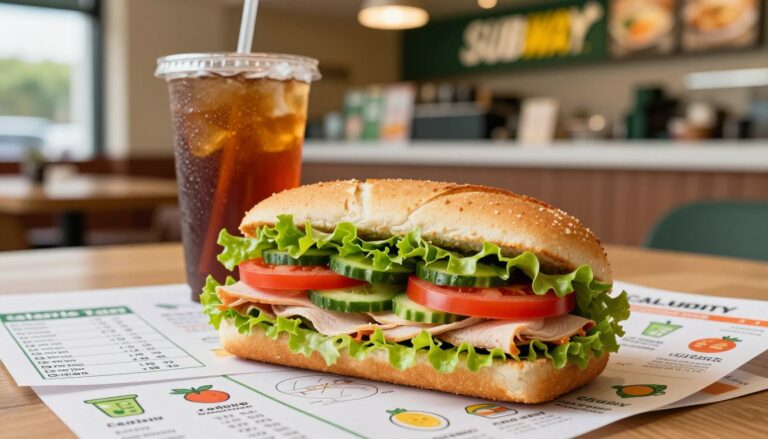
- 6″ Turkey Breast — 280 cal, 3.5 g fat, 810 mg sodium.
- 6″ Black Forest Ham — 290 cal, 4.5 g fat, 830 mg sodium.
- 6″ Oven Roasted Chicken — 320 cal, 5 g fat, 640 mg sodium.
- 6″ Veggie Delite — 230 cal, 2.5 g fat, 310 mg sodium.
- 6″ Sweet Onion Chicken Teriyaki — 380 cal, 4.5 g fat, 900 mg sodium.
Footlong ranges and doubling
Footlong values often approximate double the 6-inch numbers. For example, a footlong Turkey Breast is about 560 cal and 7 g fat. Use 6-inch numbers as a quick estimate, then check the exact values if you need precise totals.
| Item (6″) | Calories | Total Fat (g) | Sat. Fat (g) | Sodium (mg) |
|---|---|---|---|---|
| Turkey Breast | 280 | 3.5 | 1 | 810 |
| Black Forest Ham | 290 | 4.5 | 1.5 | 830 |
| Sweet Onion Chicken Teriyaki | 380 | 4.5 | 1.5 | 900 |
| Veggie Delite | 230 | 2.5 | 0.5 | 310 |
Higher-sodium watchlist and quick swaps
Some lighter subs pack sodium. The sweet onion and Subway Club-style picks can hit 880–900 mg even before sides. Watch sauces and cheese.
- Keep sauces light. A drizzle of vinaigrette cuts fat and sat. fat.
- Skip extra cheese to control saturated fat.
- Load up on raw veggies for volume and fiber.
- If you choose a wrap, compare the wrap build to the 6-inch sandwich—wraps can raise calories and fat.
Calories, Fat, and Protein Across Popular Subs, Melts, and Footlongs
Small add-ons often cause the biggest jumps in calories and fat — here’s how to spot them.
Classic 6-inch drivers
Cheese, bacon, mayonnaise, and a drizzle of oil are the usual suspects. One tablespoon of mayonnaise adds about 110 calories and 12 g fat. A teaspoon of olive oil adds roughly 45 calories. Those little choices add up fast.
Melts and premium builds
Compare builds: a 6″ Chicken & Bacon Ranch Melt is 570 cal and 28 g fat. A 6″ Steak & Cheese is 380 cal and 10 g fat. The melt stacks more saturated fat through extra cheese and sauce.
Sweets, tuna, and portion choices
Sweet Onion Chicken Teriyaki lists 18 g sugars and 380 calories. Sweet onion sauce adds 40 cal and 85 mg sodium per serving. Tuna jumps fat because the filling is richer even when bread carbs stay similar.
| Item (6″) | Calories | Fat (g) | Sat Fat (g) | Real-Time Price |
|---|---|---|---|---|
| Chicken & Bacon Ranch Melt | 570 | 28 | 10 | $6.99 |
| Big Philly Cheesesteak | 500 | 17 | 9 | $6.49 |
| Steak & Cheese | 380 | 10 | 4.5 | $5.79 |
Use the 6-inch size as your baseline. Then check footlong or double-meat options. Watch slices of cheese and extra bacon. A simple swap can cut fat and keep the sandwich satisfying.
Salads, Bowls, and Veggie-Forward Options for Lighter Nutrition Values

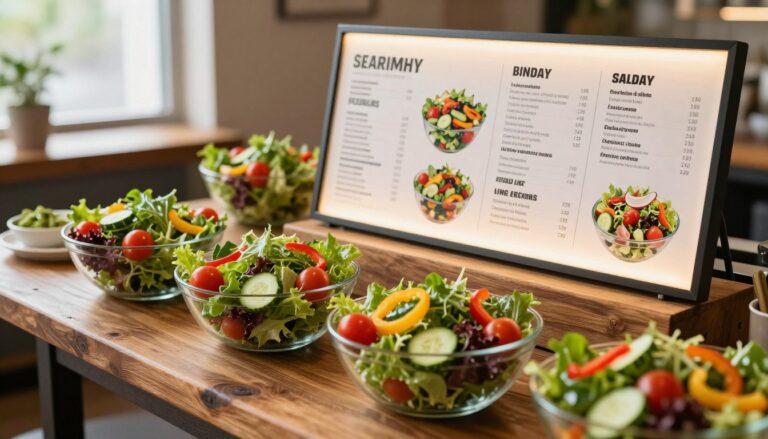
A well-built salad can deliver the comfort of a sandwich while trimming calories and saturated fat. Choose a bowl to skip bread and keep protein front and center.
What the listed values include
Nutrition values for a salad usually count the vegetable base and protein. They do not include dressing or croutons.
That means your final plate can change a lot depending on extras. Keep this in mind when you check totals.
Protein profiles to compare
Chicken breast salads offer solid protein with moderate sodium. Turkey breast is similar and often slightly lower in fat. Ham-based salads give familiar flavor but can raise sodium.
Veggie-forward salads keep calories low and add fiber. Add cheese or bacon and those numbers climb fast.
Dressing impact
Pick a dressing that matches your goals. Ranch adds fat and sat. fat. Fat-free Italian and fat-free red wine vinaigrette keep fat low but can add sodium.
| Dressing | Calories | Total Fat (g) | Sat. Fat (g) | Sodium (mg) |
|---|---|---|---|---|
| Ranch | 110 | 10 | 4.5 | 540 |
| Fat Free Italian | 57 | 0 | 0 | 720 |
| Red Wine Vinaigrette (fat free) | 30 | 0 | 0 | 340 |
Crunch without the calories
- Peppers
- Onions
- Cucumbers
- Banana peppers
Turning a salad idea into a bowl removes bread and usually trims carbs. A wrap can add calories and fat depending on the tortilla and cheese choice.
For a quick guide to lighter choices, see these healthy options.
Breakfast Nutrition: Egg, Cheese, Bacon, Ham, and Flatbread Choices
Eggs set the base, but bread and slices of cheese decide how heavy a morning meal feels.
Choose egg white to cut calories and fat. An egg white & cheese on an English muffin runs about 150 calories, 3.5 g fat, and 480 mg sodium. Add bacon or ham and sodium jumps quickly.
Pick your bread with care. English muffin, 9-grain wheat, and mornin’ flatbreads change totals more than you think. Treat a wrap like a bread choice and compare the full build before you swap.
Footlong breakfast sandwiches climb fastest. A footlong Egg & Cheese hits 730 calories and 1,780 mg sodium. Premium footlongs reach 1,000–1,310 calories and can top 3,000 mg sodium.
| Item | Calories | Total Fat (g) | Saturated Fat (g) | Sodium (mg) | Real-Time Price |
|---|---|---|---|---|---|
| Egg white & cheese on English muffin | 150 | 3.5 | 1.5 | 480 | $3.49 |
| Footlong Egg & Cheese (regular egg) | 730 | 24 | — | 1,780 | $7.29 |
| Footlong Breakfast B.M.T. Melt | 1,000 | 44 | — | 3,270 | $10.49 |
| Hash browns (4 pc) / 8″ Cheese pizza | 150 / 680 | 9 / 22 | — / — | 440 / 1,070 | $2.49 / $6.99 |
Keep extras minimal. One extra slice of cheese or an added bacon strip tips saturated fat fast. If you want the full breakdown for breakfast builds, see the full nutrition sheet for detailed values and store prices: full nutrition sheet.
Build Your Best Subway Order: Bread, Cheese, Sauces, Cookies, and Smart Swaps
Make each bite count with simple swaps that cut fat and keep flavor. Start with bread choice: Italian (200 cal), 9-grain (210), or flatbread (220) set your baseline.
Limit cheese to one portion or skip extra slices. Cheese raises saturated fat faster than calories. Add lots of vegetables and a splash of vinegar for crunch and brightness.
Watch sauces. Mayo and creamy dressings add big fat per spoon. Mustard or a light vinaigrette keeps calories down. If you pick a wrap, compare its baseline to a 6″ sandwich.
Cookie reality check: most cookies are ~200–220 cal with 4.5–6 g sat fat. For chocolate options, expect similar calories across chocolate chip, double-chocolate, and chocolate chunk. Plan cookies with your sides and check nutrition information and real-time prices to finish smart.